I’ve known there was a band of rust on the front cross box since I first looked at her but there was no evidence of a leak. However, the other day when I started her up cold I happened to notice that a small amount of condensation was bubbling out of a pinhole leak.
Whilst I will get round to replacing the cross box at some point it’s not a job I want to do at the moment – so time for a temporary fix.
With the front end up on axle stands I got out the wire brush to clean up the rust. Whilst it’s mostly surface rust, once it was cleaned up the source of the leak was apparent.
The exhaust bandage was fitted according to the instructions on the packaging, the most difficult part being feeding it round the top of the cross box.
Quick trip out to heat it up and cure the adhesive and job done (shortly before it started raining).
Ah, Pierre, shall we use ‘ose clips on any of zee many joints of zis deux-cheveaux fuel line?
Bah non, John-Paul, zey cost two centimes each – do you zink, Monsieur Citroën, ‘e is made of money?
Bof, ah theenk it is time for luunch anyway. Where is zee vin rouge?
It occur to me – whilst ah eat mah baguette and drink mah vin rouge – zat maybe one of zeese unclipped joints may be zee weakest link in zis system as it can flex more zan zee rubber pipe we put in to abszob zee flex.
Bof, we shall let some crazy Eeenglish fool deal wizz zat in 30 years.
30 years later:
After checking the visible fuel line for potential leaks the only place left to check was on top of the fuel tank and the only way to check that is to unbolt and lower the fuel tank. As fully lowering the fuel tank is realistically a two person job I had to make do with lowering it about 10cm using a trolley jack. This didn’t give me much access but I could see what was going on and get in with one hand.
There is a metal pipe that comes up from the fuel tank onto which a short length of rubber hose is attached. The other end of the hose is attached to a PVC fuel line which then runs down to the front of the chassis. This is a pretty good system for joining the metal pipe to the main PVC fuel line as the rubber hose can absorb any flex in the system between the fuel tank (which is mounted on rubber bushes) and the chassis. However, without a clip on the joint it means that the joint becomes the weakest point.
Examining this I could see that the hose at this joint in the fuel line had indeed developed a small split right at the end, weakening the joint, so was a potential source of a leak. Being at a high point of the system it wasn’t going to be letting fuel out but would have been allowing some air in.
Ideally I would have liked to replace the length of rubber hose but, with limited access, the best I was able to do was put a hose clip on the joint to hold the split closed and reinforce the joint.
This isn’t a long term fix but does buy me some time until I can fully replace the fuel line. With hose clips at every joint this time…
Update: With the able assistance and extra resources of TomB engineering we fully dropped the tank and that short length of split hose was replaced as part of a larger piece of work.
The suspension cylinders of a 2CV are key to the interlinked front and rear system that provides such a good ride over uneven surfaces. Like most moving parts on a car they benefit from lubrication. Given there are rubber seals in the cylinders that maintain the seals that enable the transfer of movement from front to rear spring, it’s necessary to use a non-mineral oil that won’t cause them to perish. Some form of vegetable oil is normally used – caster oil being the traditional family choice as it’s quite viscous at ambient temperatures.
Back when Judith was fresh out of the factory it was possible to buy caster oil from the village chemists, these days it’s available as a cosmetic item from on-line retailers. The retailer I chose was also able to provide a suitably sized syringe and tubing.
To get the oil into the right place, the rubber gaiter on the suspension pull rod needs to be pulled back and the tube inserted as far as it will go as the seals are in the middle of the cylinder.
This process needs to be repeated four times: front and rear on the left and right cylinders.
As I didn’t know when this had last been done I put about 50ml into each side of each cylinders which is about as much as they would take.
After completing this it’s best to take the car our for a drive over some bumpy roads to work the oil into the seals.
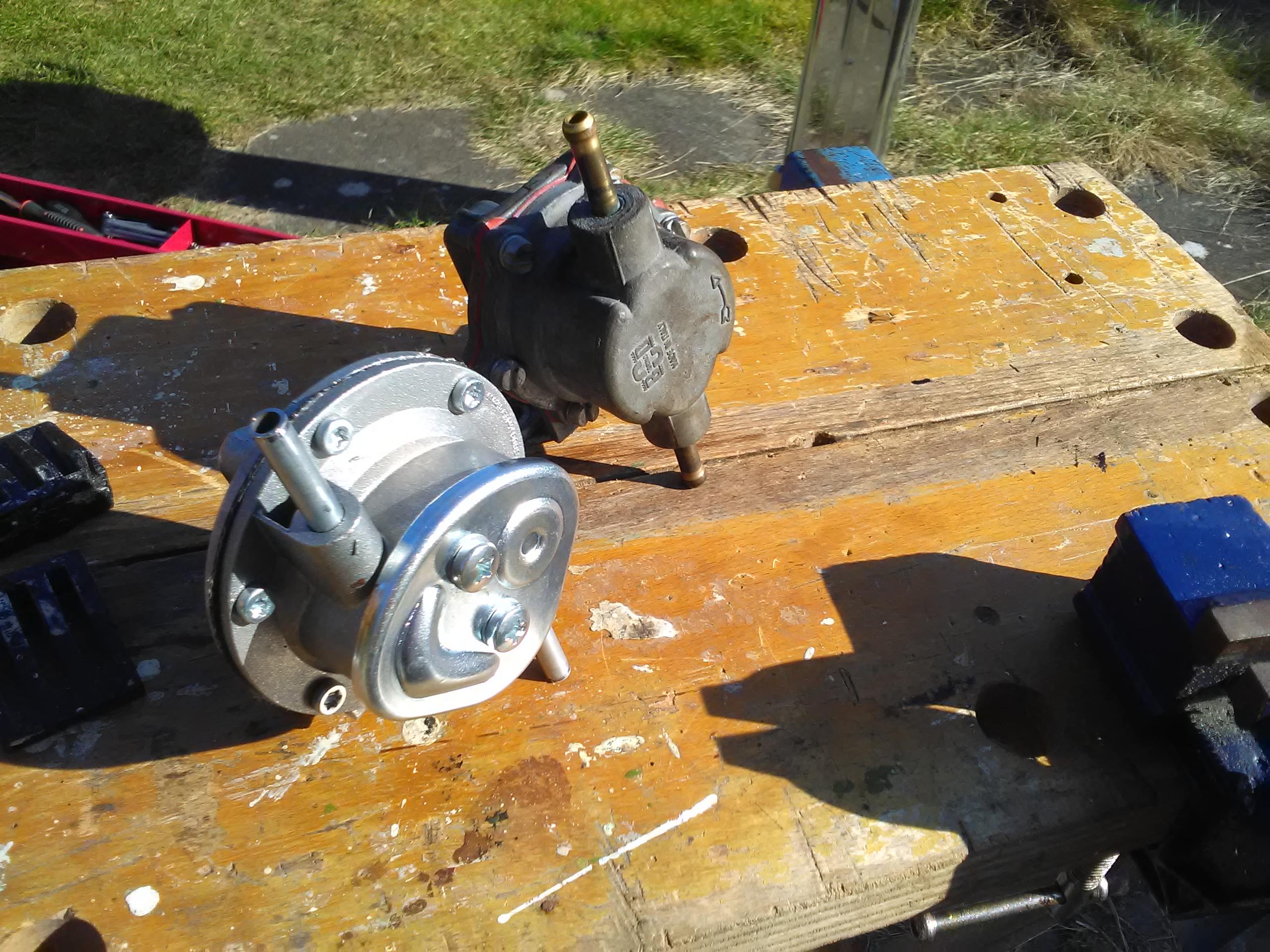
In the first couple of outings after the winter I noticed there were some fuel starvation issues, especially at low revs. Suspecting a tired fuel pump I set about replacing it with a brand new one.
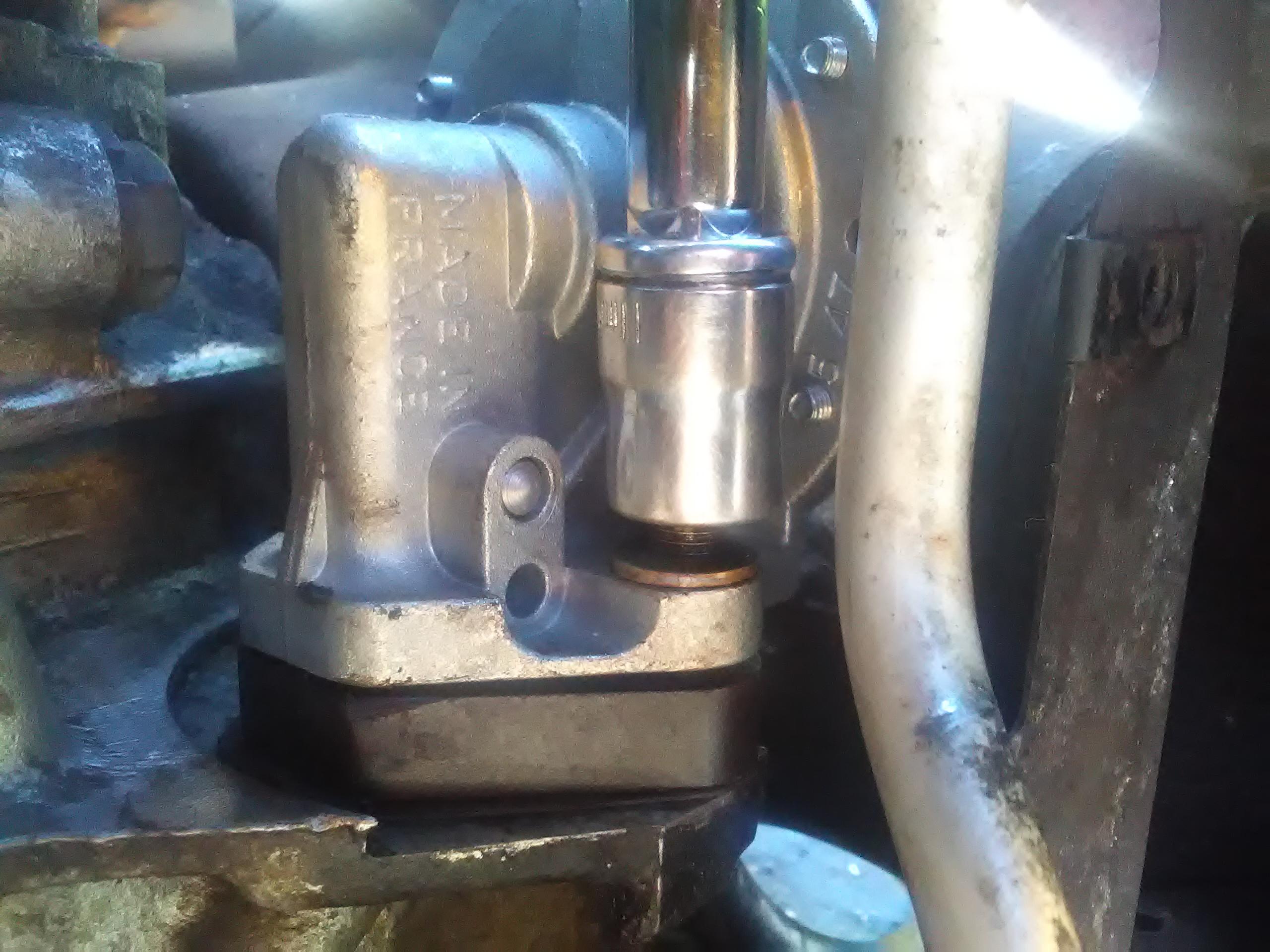
Having already taken the fuel pump out to renew the hoses there wasn’t much to add to the process outlined there. However, this time I did take the fan off and get access from the front of the engine which made things significantly easier – especially locating the mounting bolts.
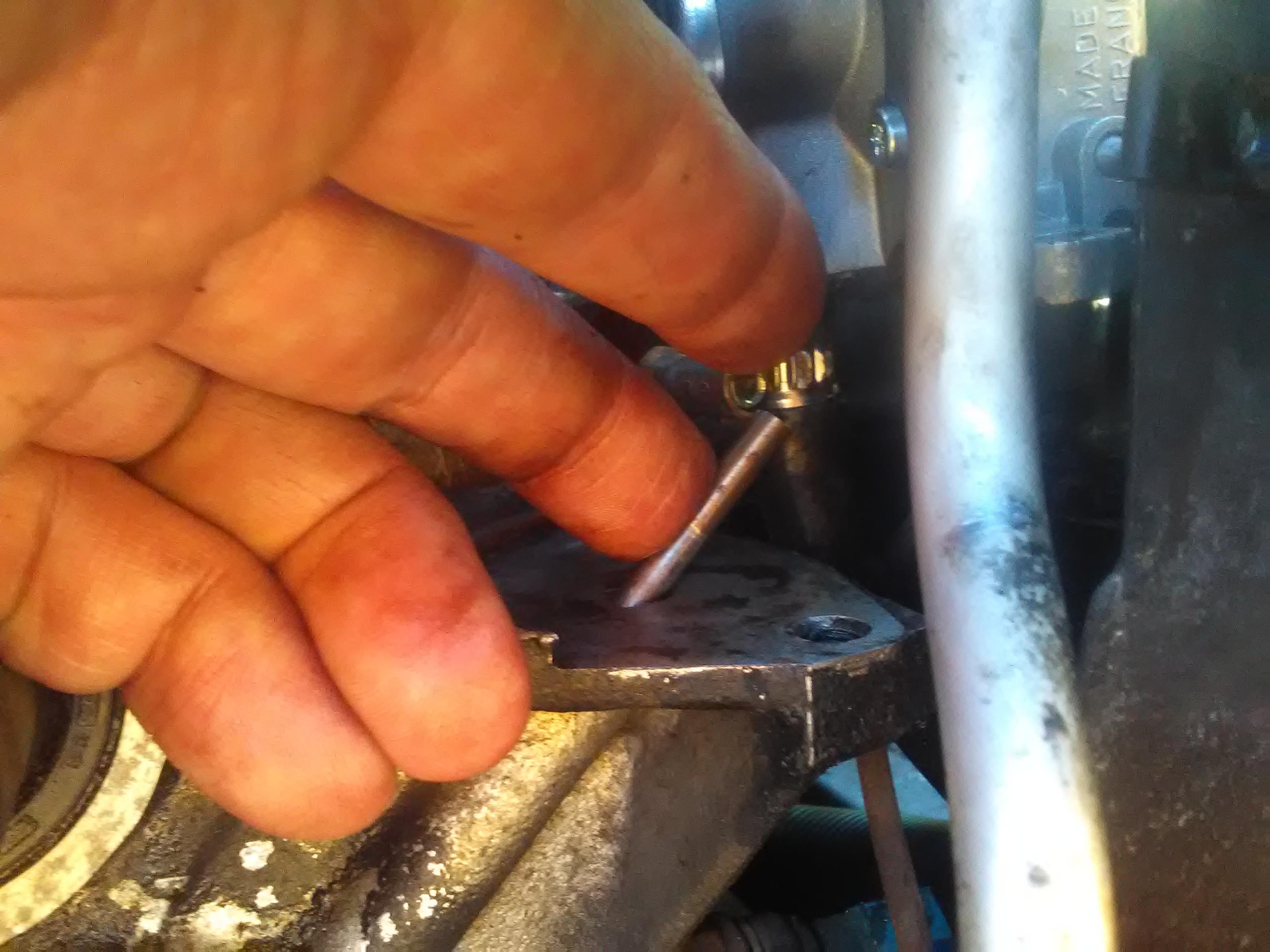
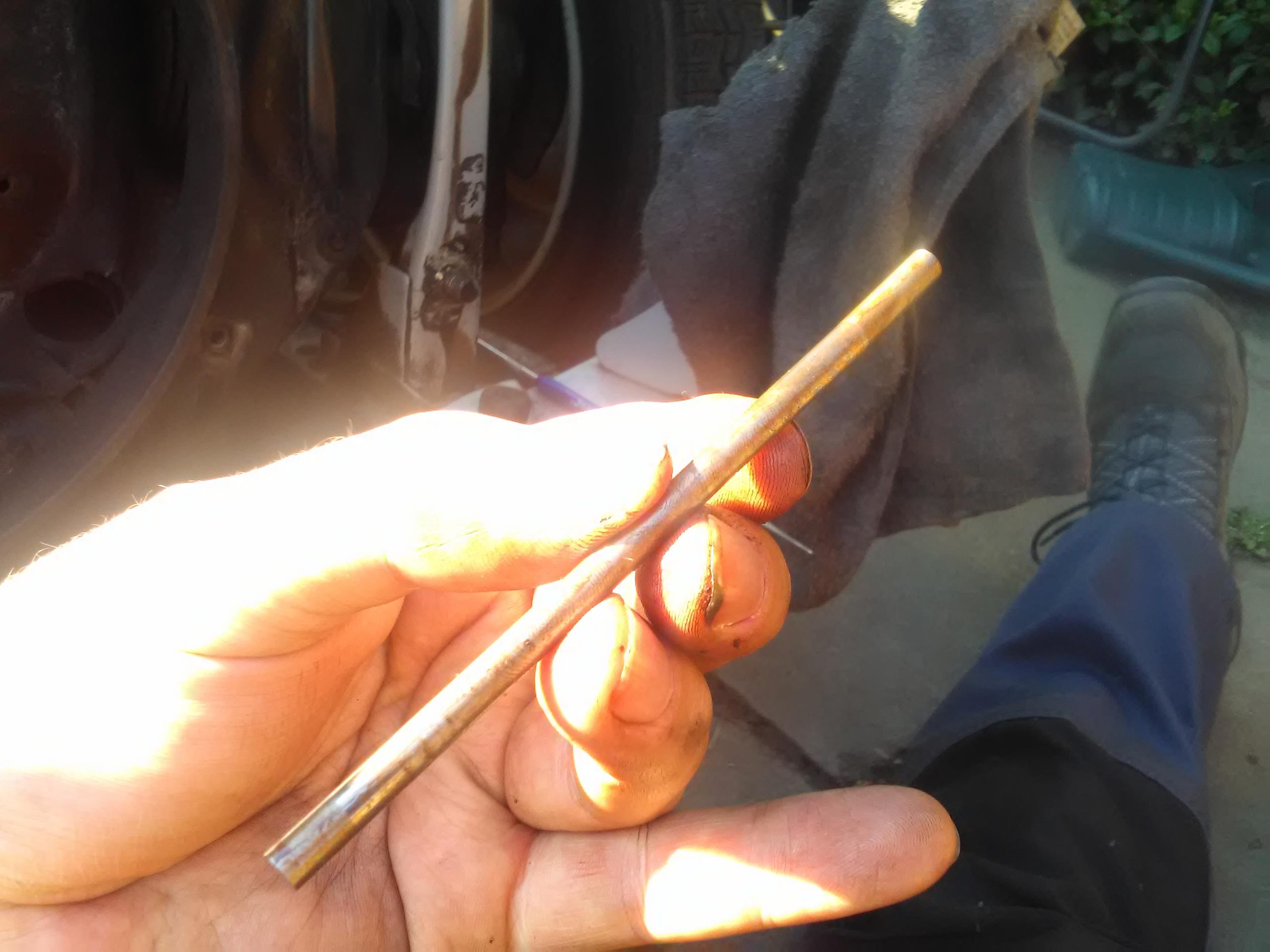
Whilst I had the pump out I took out the actuator rod and cleaned it. This rod is driven by the crankshaft and mechanically activates the fuel pump. With the spacer block removed it’s not too difficult to tease the rod out as access is quite good.
After a clean and a fresh coating of grease, refitting was the reverse of removal.
A nice long shakedown run (starting by staying close to home) showed a significant improvement in the fuel delivery but there was still the odd niggle that warrants further investigation – either another split fuel hose or a carb issue seem the most likely.
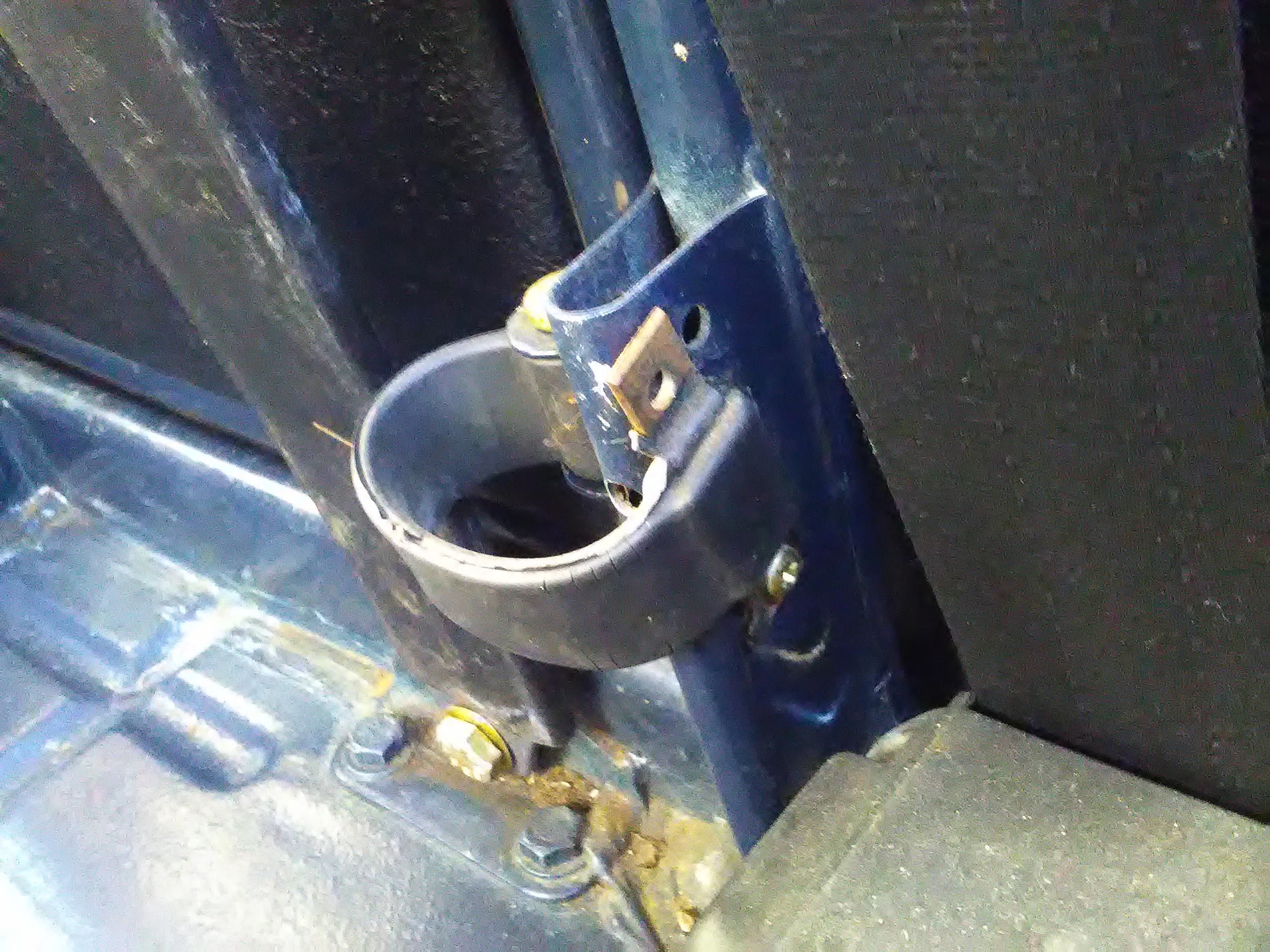
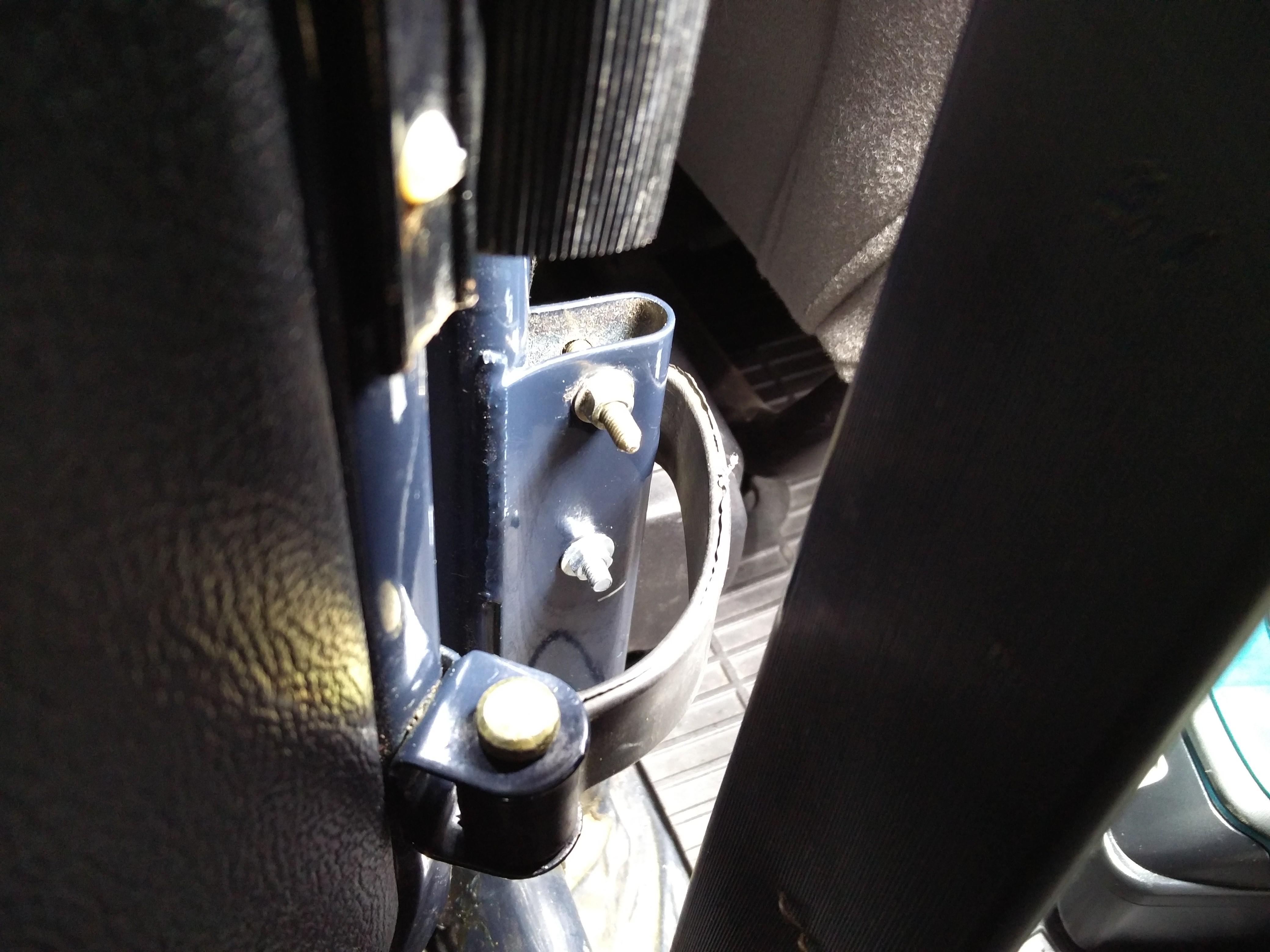
Whilst cleaning out the inside of the car I noticed one of the bolts holding the near side rear door retaining strap was missing.
As fixes go they don’t get much simpler than this: adding a new nut and bolt. (And also cleaning up some rust, old grease and dirt before re-lubricating.)
Disconnecting the battery is a common occurrence on Judith as I do it for storage and as a safety measure when working on anything that doesn’t require the electrical system (which, on a 2CV is most things).
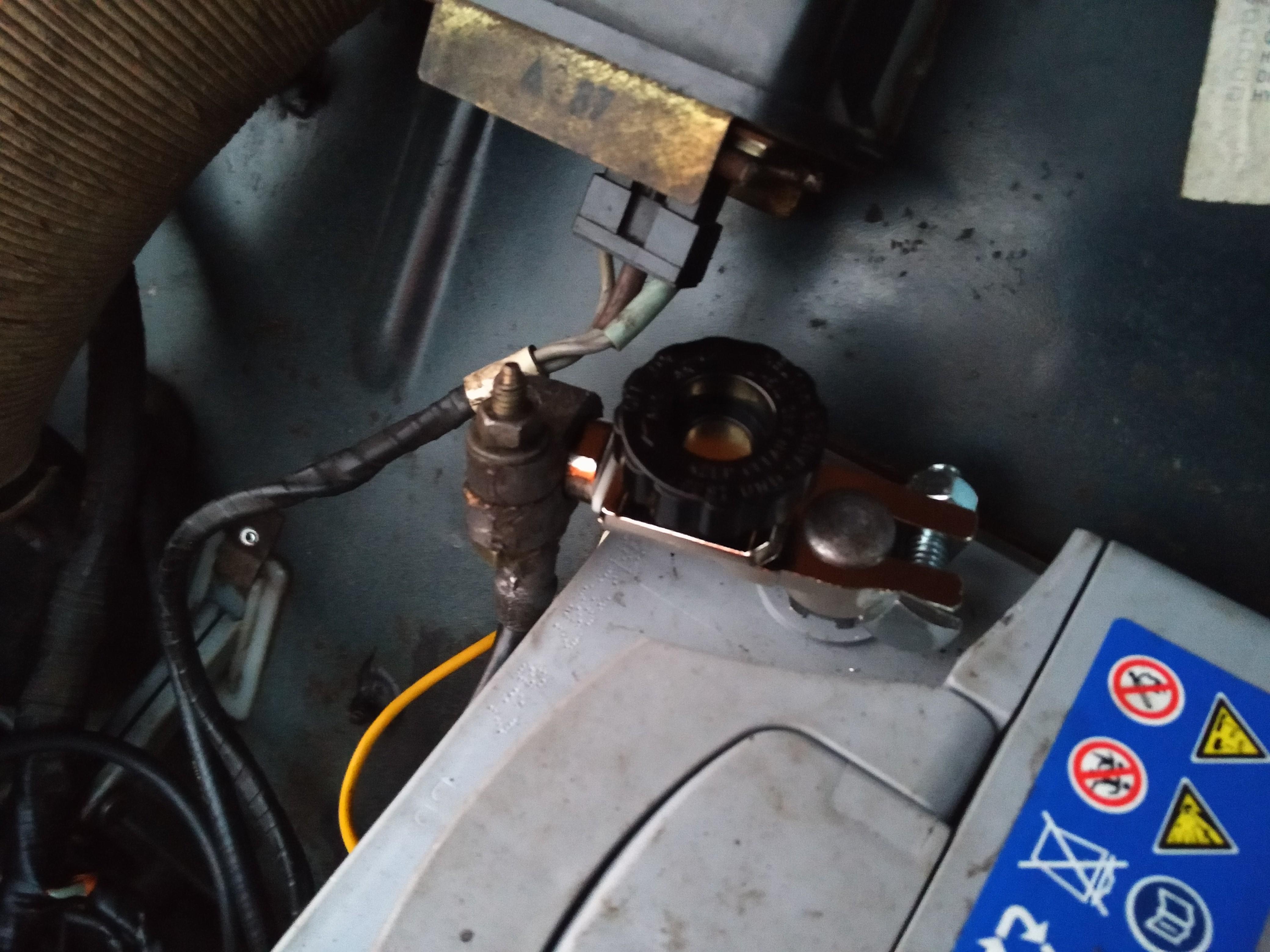
As connecting and disconnecting the negative terminal requires a 10mm spanner and puts stress on the wires I wanted a better and more convenient solution: a battery isolator. Looking around there are various options but, as the secondary earth wire is cast into the negative terminal connector I didn’t really want to use an isolator that required replacing the connector. The one I’ve settled on has both male and female connectors so sits inline with no modifications required.
It consists of two metal plates separated by an isolator and a brass screw. When screwed down the bottom of the nut contacts the top plate and the thread contacts the lower plate completing the circuit.
Fitting to the car was as simple as it looks but I might try and replace the pinch bolt, whilst it shouldn’t need removing very often it does seem to be made of soft steel and the nut sits somewhere between my 12mm and 13mm spanners – the price of a decent replacement is worth the piece of mind.
Whilst sorting through some Citroenalia from the family archives I found an old Citroen Car Club window sticker. These were a standard fixture behind the rear view mirror on 2CV’s of my youth – so, in a fit of nostalgia, that’s where this one has gone.